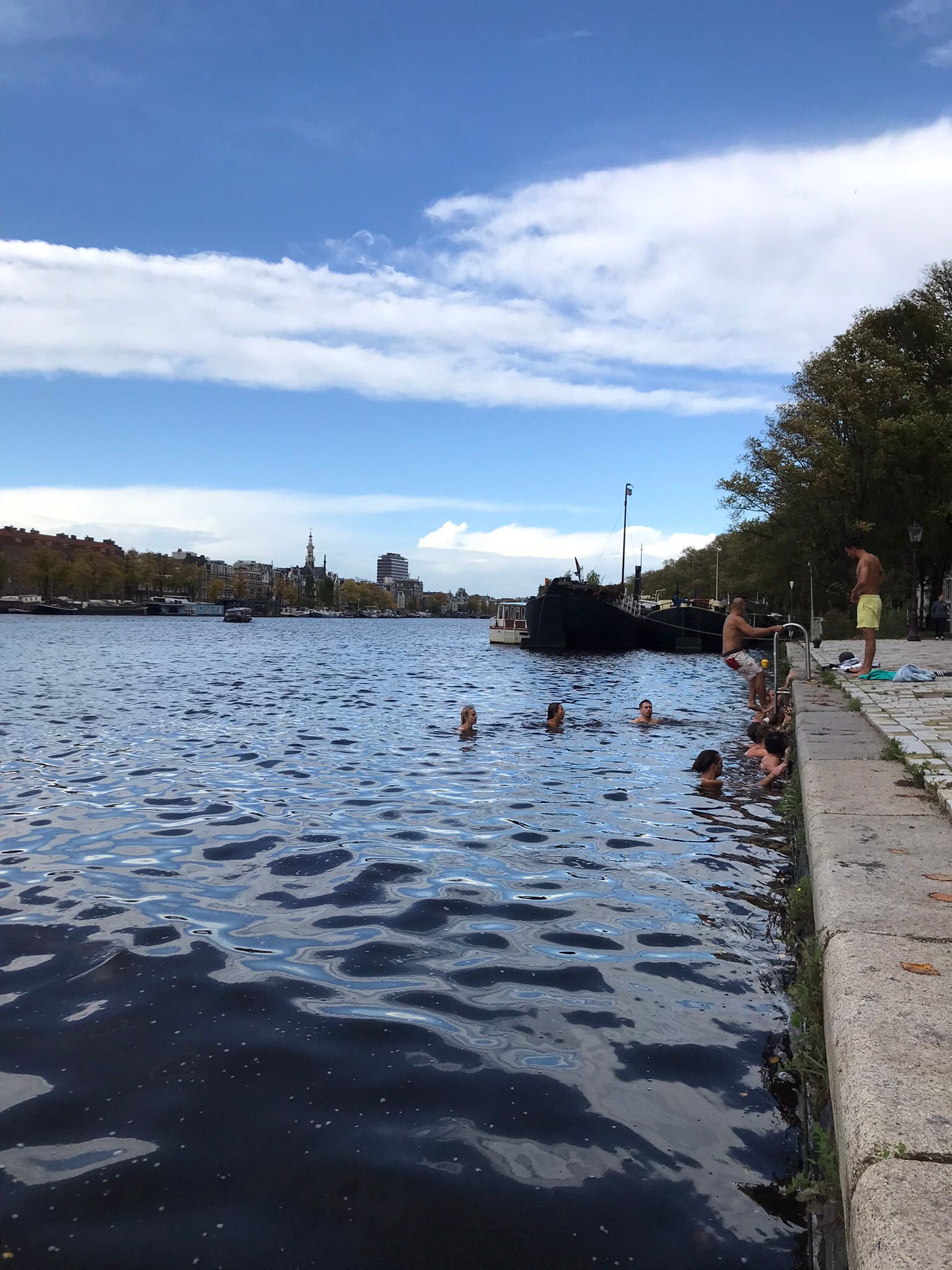
How to start cold-water swimming in Amsterdam
Everyone remembers their first cold dip. The gasp, the burning skin, the strange calm about a minute in, and then the grin that does not leave your face for the rest of the morning.
The good news: you do not need to be a strong swimmer or a "cold person" to start. You need the right spot, the right kit, and a few rules you never break.
Start in summer, keep going into autumn
The easiest way to build cold tolerance is to never stop. Start swimming outside while the water is still mild, and keep going once a week as it cools. Your body adapts gradually: water that would have shocked you in January feels manageable when you have followed it down degree by degree since August.
If you are starting now, in October, that is fine too. Just keep your first dips very short.
Where to swim
Amsterdam has a set of official swimming spots where the water quality is tested during the season (1 May to 1 October):
- Marineterrein Binnenhaven — the first official swimming spot in the city centre
- Strand IJburg — sandy beach on the east side
- Nieuwe Meer — in the Amsterdamse Bos
- Gaasperplas — large lake in Zuidoost
- Diemerpark and Het Twiske, just outside the ring
Check zwemwater.nl or the Zwemwater app before you go, especially after heavy rain, when quality can dip temporarily.
About the canals: swimming in Amsterdam's canals is not allowed. They are busy with boats and the water is not tested for swimmers. Outside the official season, no spot is monitored, so in winter you are relying on your own judgement. One more reason to swim with people who know the water.
What to bring
- A swimsuit and a bright swim cap, so boats and fellow swimmers can see you
- Neoprene gloves and socks once the water drops below about 12°C. Hands and feet go first.
- A towel or changing robe you can get dressed under quickly
- Warm layers: a hat, a thick jumper, and loose clothes that are easy to pull on with numb fingers
- A flask of something warm to sip, not to gulp
- A tow float: it makes you visible and gives you something to hold on to
Your first dip, step by step
- Walk in slowly if you can. Do not jump or dive into cold water.
- Expect the gasp. The cold shock response makes you breathe hard for the first minute. That is normal.
- Focus on breathing out, long and slow, until your breathing settles. The RNLI's advice if you ever get into trouble is to float on your back for 60–90 seconds until the shock passes.
- Stay close to the edge and keep it short. A minute or two is a real first dip.
- Get out before you feel you have to. The cold keeps working after you leave the water.
Your first goal is not to swim far. It is to stay calm for one minute.
Warming up afterwards
Your body keeps cooling for a while after you get out — the "after-drop." So get dry and dressed straight away, starting with your top half. Put on a hat, sip something warm, and move around gently. Do not jump straight into a hot shower: your blood vessels open up fast and that can make you dizzy. A gradual warm-up is safer, which is exactly why we like to end in a sauna (more on that in another field note).
The rules we never break
- Never swim alone. Always have someone in the water with you or watching from the side.
- No alcohol before a dip.
- Shorter is better as the water gets colder. One minute per degree is a rough upper limit for beginners, and far less is perfectly fine.
- Talk to your doctor first if you have a heart condition, high blood pressure, or are pregnant.
- If you start shivering hard or feel confused, get out and warm up.
Do it together
Cold water is much easier, and much safer, in a group. Someone checks the water, someone holds the towels, and everyone gets that post-dip high together.
If you want to try your first dips with people who will talk you through it, join us. Our bi-weekly dips are open to complete beginners.
Join the community
Be the first to know about upcoming dips, trips, and adventures.